

By Jefferson Beavers, communication specialist, Department of English
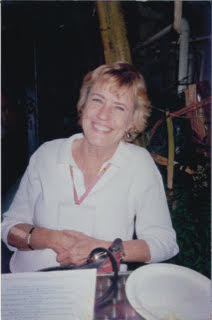
Dr. Judith A. Rosenthal, a feminist literary scholar and Fresno State professor emerita of English, passed away from pancreatic cancer on Dec. 25, 2023. She was 78.
A career educator who shared writing and culture with others throughout her life, Dr. Rosenthal taught literature courses at the University from 1971 to 2007. She specialized in Medieval and Renaissance literatures, with deep interests in women writers and the works of William Shakespeare.
In retirement, she became a fixture among the expatriate community in San Miguel de Allende, Mexico, in particular as an organizer with the city’s bilingual Shakespeare readers and as English book director at the city’s Biblioteca Pública.
Dr. Lisa Weston, professor of English and former department chair, said she will most remember Rosenthal for her laugh, which was “emblematic of the joy with which she approached all facets of life — her personal relationships, her political engagements, and certainly her teaching and scholarship.”
Weston called Rosenthal “the perfect mentor,” in particular for graduate students, a faculty member who took extra time to get to know those she taught, to understand and respect their experiences and needs.
According to Weston, Rosenthal came to Fresno State at a time of political and social turmoil, as the number of students of color and women in the classroom began to expand. It was also a time when the number of women on the University’s faculty started to slowly but surely grow.
“Judy came as part of a loose cohort, particularly, of feminist artists and scholars,” Weston said. “Feminist theory and the heritage of women authors long formed the core of her scholarship.”

Years before late medieval and early modern figures like Margery Kempe, Aphra Behn, Katherine Phillips, or Sor Juana Inés de la Cruz became accepted and expected figures in the literary canon, Weston said Rosenthal was reading them, including them in her syllabi, writing pioneering articles on them, and organizing sessions about their works at conferences.
Rosenthal’s scholarly work on Phillips was perhaps the most significant, Weston said, as it explored how the 17th Century poet’s works were shared and preserved within a community of female friends, which “spoke so clearly to the ethics and rewards of similar communities of women, then and now.”
According to Dr. Laurel Hendrix, professor emerita of English, Rosenthal reinvented herself over the course of her time in the department, evolving her scholarly interests from New Criticism and structuralism into postmodern criticism — most importantly, feminist criticism.
Hendrix called Rosenthal “a pioneer in the second-wave feminist movement, working within and outside the English Department in order to carry out the many projects of second-wave feminism,” which included greater access for women in the academy, the application of feminist perspectives to literary and cultural criticism, and the revision of the canon to include rediscovered early women writers.
Hendrix enjoyed traveling to conferences with Rosenthal, delivering scholarly papers, feeding their minds by attending conference sessions, and taking in the cultural scenery wherever they went. She said Rosenthal taught for a number of years in the College of Arts and Humanities’ London Semester study abroad program, guiding students and fellow travelers expertly through her favorite London sites and experiences.
Rosenthal’s deep knowledge and memory of University history and politics made her a trusted mentor for younger women faculty, Hendrix said. “She was an inspiring teacher, and my own teaching owes much to her example, her wisdom, and her own classroom practices,” she said.

Born in Syracuse, New York in 1945, Judith Ann Rosenthal skipped a grade in high school and left home at age 16 to go to college. She earned a bachelor’s degree from Harpur College, now known as SUNY Binghamton, and she went on to earn a master’s degree and Ph.D. in Renaissance literature from the University of Pittsburgh. Her doctoral dissertation was on the poet and satirist Andrew Marvell.
According to her husband, George Hedgpeth, Rosenthal outgrew her early home life by plunging herself into literature and the arts. With a freshly minted Ph.D. in her mid-20s, Rosenthal landed a tenure-track teaching job at Fresno State.
The two first met in 1973, got together in 1978, and were eventually married for 43 years, Hedgpeth said. They had no children, but they did have “serial labradors” over the years, enjoying daily walks with the dogs around Dailey Elementary, Hamilton Junior High, and Fresno High School, and then later at the community dog park in San Miguel de Allende.
Hedgpeth said the Unitarian Universalist church was a huge part of his wife’s life. Folks from the UU became Rosenthal’s family, he said, both in Fresno and for the past 18 years in Mexico.
According to a tribute from the Unitarian Universalist Fellowship of San Miguel de Allende, Rosenthal was a longtime member, serving on their board of directors, Sunday Service committee, and social action committee. The tribute also noted her dedicated volunteer service to programming at the Biblioteca Pública, where she chaired the committee to select books in English for the community’s popular public library, the second-largest bilingual library in Mexico.
Hedgpeth said the UU church’s commitment to inclusivity and acceptance long resonated with him and with Rosenthal. The UU commitment to social justice was particularly important.
Rosenthal volunteered for many years with an organization called Mujeres en Cambio, a nonprofit dedicated to helping educate girls in the rural areas of Guanajuato. She led many scholarship fundraisers to help girls affected by the grinding poverty of el campo.
“Rural teachers identify girls who could benefit from the ‘girl effect,’ those who would benefit from education and then return to their communities,” Hedgpeth said. “This was one of Judy’s causes, and it was one of her favorite times of the year to hand out scholarships to the girls.”
As a retired English professor, Rosenthal was a sought-after and respected speaker and collaborator in the tight-knit Shakespearean community of San Miguel de Allende, Hedgpeth said. Her years of working directly with actors brought a new perspective to her appreciation of the well-known 16th-century dramatist.
As a longtime volunteer with the city’s Shakespeare readers group, she took on communications, introductions to plays, casting, and innumerable other roles for each gathering. After the 2018 passing of the group’s leader, the Emmy-winning actress Olivia Cole, Rosenthal capably stepped in for several years to lead the group and keep it alive, Hedgpeth said, earning praise and respect from the many international actors who passed through.
Rosenthal was also an outstanding master bridge player who traveled to tournaments; at age 70, alongside her nephew, she climbed a ladder up a sheer cliff in El Charco del Ingenio; and every October for 13 years, she and her husband would travel to explore the historic Teatro Juárez and take a picture together on the street in front.
“Judy was fully engaged,” Hedgpeth said. “Wherever she went, she was involved. The world out there of new teachers, new books, new people, new experiences, she was open to it all.”
Dr. Lillian Faderman, a professor emerita of English, came to Fresno State College (as it was known then) in 1967. She was the first and only woman in an English Department faculty of 30 men. Hired in 1970 was the second woman, Dr. Jean Pickering, and in 1971, the third, Dr. Rosenthal.
Faderman’s early memories of her colleague go like this:
Near the end of the 1970-71 academic year, I was elected (by the 30 men) to be chair of the department. I had no resistance from them when I said we needed to be open to hiring another woman.
Judy Rosenthal was only 26 years old, but she stood out from all the applicants. She had done her dissertation at the University of Pittsburgh on Andrew Marvell, a 17th-century poet, but as a graduate student, she had also pioneered in teaching some of the first women’s literature courses on that campus. I had been teaching such courses too, and it was heartening finally to have not only another woman faculty member in the department, but one who shared my passion for a new and exciting and vital field.
Judy came to feminism and to academia out of frustrating personal experiences. I’ll never forget her story about why she had to get a Ph.D.:
After graduating from high school, she had looked for a job. “Can you type?” all the prospective employers asked her. She hated typing, so she realized she must go to college and get a B.A.
With a B.A. degree in hand, she again looked for a job. “Can you type?” she was again asked wherever she applied.
She went back to college to get an M.A., and then again, she looked for a job. “Can you type?” she was asked by every prospective boss.
Finally, she got a Ph.D. “Because that was the only way to make them stop asking me whether I can type,” Judy said.
Hard to imagine these days, when women have reached parity in so many jobs, but that’s the way things were in the 1960s and early ’70s — and Judy, through her commitment to feminism, helped change that.
— — —
Rosenthal is survived by her husband, George Hedgpeth; and brother, Kevin Nichols. Memorial services will be held at 2 p.m. Central Time on February 12, 2024, at the Hotel Posada de la Aldea, San Miguel de Allende, Guanajuato. A livestream will be available. In lieu of flowers, remembrances can be made to Mujeres en Cambio.
 The College of Arts and Humanities at Fresno State
Such a beautiful smile! and such a spirit to go with it!
LikeLike
It’s a good thing Judy never learned to type! An awe inspiring history of a woman dedicated to the love of literature, and now, her desire to enable Mexican women to follow in her footsteps by joining MUJERES en CAMBIO!
LikeLike
See above
LikeLike
I am sad to learn of Judy’s passing. One of the most influential and supportive professors I had between 1970 and ‘75. I took every course she taught on Virginia Woolf, and she encouraged me to “just keep writing”.
I wish I could have spoken to her just one more time as an adult, to thank her.
LikeLike