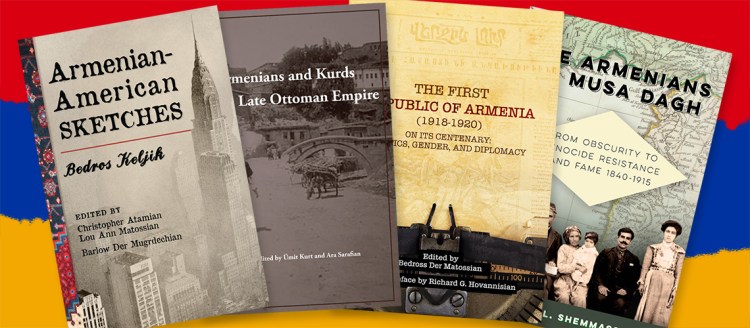
Four new books have been released in the Armenian Series of The Press at California State University, Fresno, in 2020. The Armenian Series was founded through the Armenian Studies Program with funding established by the M. Victoria Karagozian Kazan and Henry S. Khanzadian Kazan Endowment. The new books represent volumes eight through 11 in the […]
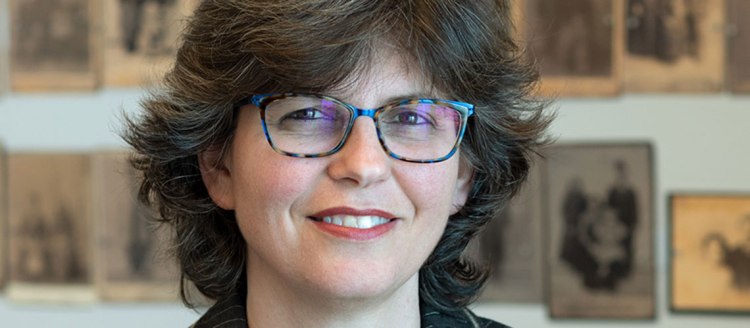
Dr. Zeynep Devrim Gürsel, associate professor of anthropology at Rutgers University, will give a presentation on “Portraits of Unbelonging: Photography, the Ottoman State and Armenians Leaving for America 1896-1908” at 7:00 p.m. Thursday, November 12 on Zoom.
The Armenian Studies Program at Fresno State will hold a two-day conference on “The State of the Art of the Early Turkish Republic Period: Historiography, Sources, and Future Directions” at 7 p.m. Friday, Oct. 2, on Zoom and 10 a.m. Saturday, Oct. 3, on Zoom.
“What Will Become of Us” follows six Armenian Americans – famous and otherwise – as they navigate the Armenian Genocide’s 100th anniversary, forging identities for the next 100 years. How can Armenian Americans honor their past while unshackling themselves from its trauma?
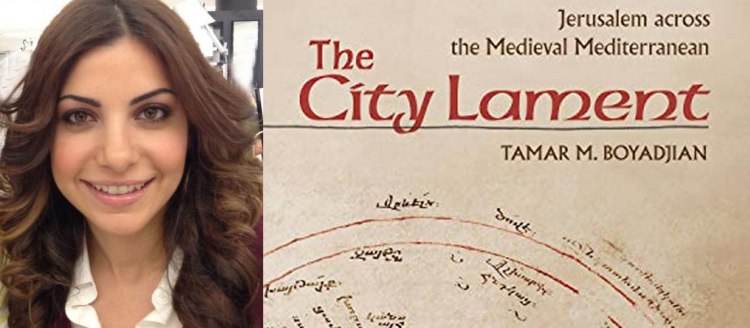
Dr. Tamar M. Boyadjian, assistant professor of medieval literature at Michigan State University, will present “The City Lament: Jerusalem Across the Medieval Mediterranean” at 7 p.m., Thursday, Sept. 24 on Zoom.
Dr. Christina Maranci, Tufts University Department of Art History and Architecture chair and Arthur H. Dadian and Ara Oztemel associate professor, will give a virtual presentation on “Ani Cathedral, its Sculpture, and its Inscriptions Revisited” at 7 p.m. Thursday, Sept. 3 on Zoom.
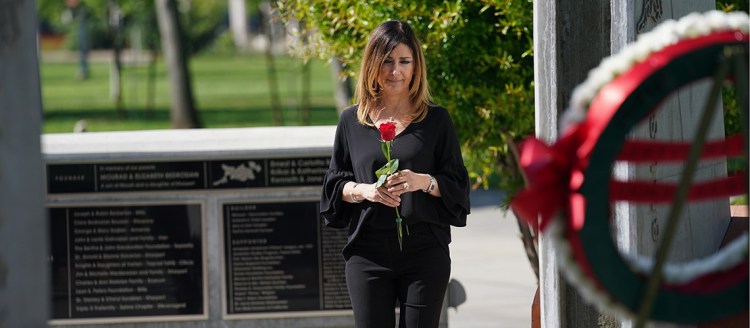
On Friday, April 24, amid COVID-19 concerns, a small group of campus leaders, photographers, and videographers assembled to record a virtual ceremony for the Armenian community. Social distancing was maintained throughout the ceremony.
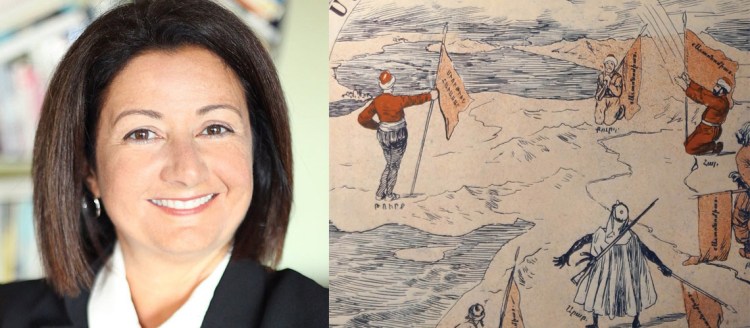
Three of the formative revolutions that shook the early twentieth-century world occurred almost simultaneously in regions bordering each other. Though the Russian, Iranian, and Young Turk Revolutions all exploded between 1904 and 1911.
The Armenian migratory experience in the late nineteenth and early twentieth centuries both parallels and sheds light on themes such as smuggling, deportation, and the criminalization of migration, that are central to the issue of global migration in the 21st century.




 The College of Arts and Humanities at Fresno State