Compiled by Jefferson Beavers, communication specialist, Department of English
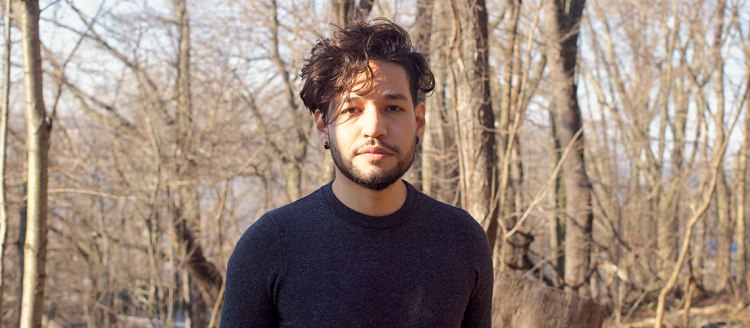
The College of Arts and Humanities welcomes new faculty Juan Carlos Mantilla to the Department of English. Dr. Mantilla is an Ecuadorian scholar of the art histories and comparative literatures of early modernity. He holds a Ph.D. from Columbia University in Latin American and Iberian Cultures, Comparative Literature and Society, and Medieval and Renaissance. His teaching and research focus on the creative interactions between different fields of knowledge across the Global South, combining material and visual culture, the history of writing and literacy, geology and archaeology and critical theory.
What are you most looking forward to teaching at Fresno State?
I love teaching, and I have prepared many new ideas and plans for courses. I like bringing together different forms of literacy — visual, written, material — connecting the literatures of different parts of the world, and seeing how these literary histories relate to contemporary debates. I’m very excited to share these teaching and learning experimental approaches with the students.
What are your teaching specialties? How did you become involved with those areas?
Mythology. I can’t really tell how I got involved because, since I can remember, I always wanted to read, write, and teach about mythology. And I can’t remember an epoch of my life when I was not fascinated with myths, not only in literature but also in film, video games, politics, etc. Now, I mostly study how mythology, archaeology, and ecology are imagined in different literatures and art histories.
How do mythological characters keep coming back to you, as you teach mythology within world literature?
Different kinds of cannibals and demons always reappear in different traditions, forms of art, and debates. They represent a very physical and a very metaphysical alterity.
How do you hope your background will elevate the English Department’s offerings at Fresno State?
I hope to bring a new perspective on how the “world” part of world literature is understood. I focus on non-western areas — Africa, Asia, and the Indigenous Americas — and to make the cultures of these regions the center of world-literary imagination. World literature as a subfield began as the study of travel narrative, mainly European travel narrative, and the study of what these narratives understood as distant worlds. The idea of distance, yet, is absolutely relative, and any part of the world can be the center, create ideas of centrality, and also create its peripheries, related to its own ways to imagine and organize the world. That is, I think, my main contribution to the field: how to see the world from Africa, Asia, and the Indigenous Americas.
As a new instructor who will be teaching global literatures, what’s your biggest wish for undergraduates as they learn to explore the intersections of cultures, identities, and geographies over time?
My biggest wish is that students become knowledgeable and curious about works of literature from parts of the world that seem, through their previous experiences, distant and to be critical of how these cultures have been framed and depicted by traditional history and geographical thought.
What are you reading right now?
As always, too many things at the same time. Today’s selection is A Venetian edition of Claudius Ptolemaeus’ “Geography” for research, Joseph Conrad’s “Heart of Darkness” for teaching, and Stephanie Foo’s “What My Bones Know” for bedtime.
What is a book you think everyone should read, and why?
Christopher Columbus’ letters and journals. He is the most mythologized, appropriated, reinterpreted, depicted, monumentalized, and de-monumentalized figure. But all these historical imaginations of Columbus are very distant from his own writings, and his own depictions and misinterpretations. Knowing Columbus can teach a lot about how myths bind and move histories across time and time.
What are your fall 2023 office hours?
Mondays and Wednesdays from 2 to 4 p.m. I can be reached at garzonmantilla@mail.fresnostate.edu.
 The College of Arts and Humanities at Fresno State